
Welcome to Insights & Updates
Stay inspired, informed, and connected with our curated space for discovery and growth. Here, we bring you thoughtfully selected recommendations—from movies that spark conversation and books that ignite curiosity, to events that foster community and meaningful connections. Whether you’re looking for your next favorite read, an engaging film, or opportunities to connect and learn, this page is your go-to hub for staying inspired and in the know.
Stories of Change
These case studies serve as living lessons from the field, capturing the wisdom of communities and organizations engaged in the urgent work of justice and transformation. Through these stories, we share what we've learned about building power, centering those most impacted, and creating systems that honor the dignity and humanity of all people. We offer these experiences not as blueprints, but as invitations to learn alongside us.
Movie Recommendations
Explore our curated selection of documentary films and series, chosen for their clarity, depth, and ability to spark reflection. From essential titles to lesser-known gems, each pick offers real stories and fresh perspectives worth sitting with long after the credits.

13th (2016)
Director: Ava DuVernay is a Black filmmaker, screenwriter, and director who became the first Black woman to win the Best Director Prize at Sundance and to be nominated for a Best Director Golden Globe. She's known for centering stories of racial justice and has become one of the most influential voices in cinema. Synopsis: This documentary explores the intersection of race, justice, and mass incarceration in the United States. Named after the 13th Amendment, which abolished slavery except as punishment for crime, DuVernay traces how this loophole has been exploited to continue the oppression of Black Americans through convict leasing, Jim Crow laws, the war on drugs, and today's prison industrial complex. The film features scholars, activists, and politicians explaining how systems evolved to maintain racial control even after slavery's official end. Essential viewing for understanding systemic racism and how institutions perpetuate inequality.

Whose Streets? (2017)
Directors: Sabaah Folayan is a Black filmmaker and activist, and Damon Davis is a Black interdisciplinary artist, filmmaker, and activist from St. Louis. Both were participants in the Ferguson uprising and wanted to tell the story from the community's perspective rather than through mainstream media's lens. Synopsis: This documentary takes viewers to the front lines of the Ferguson, Missouri uprising following the killing of Michael Brown by police in 2014. Unlike news coverage that focused on "riots," this film shows the organized resistance, community care, and sustained organizing that emerged. It follows activists like Brittany Ferrell and Alexis Templeton as they build a movement, creating the blueprint for what would become a national conversation about police violence and Black lives. The film demonstrates what grassroots organizing actually looks like - messy, sustained, community-driven, and powerful.
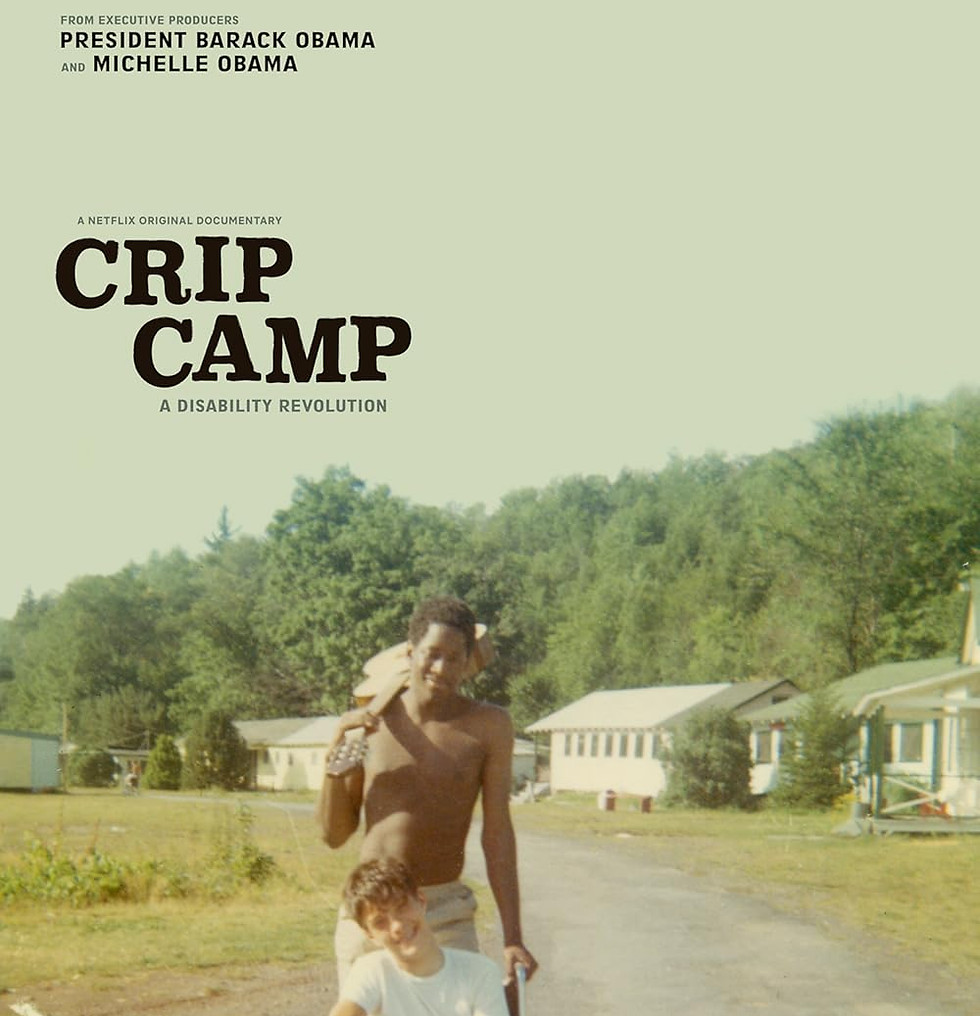
Crip Camp: A Disability Revolution (2020)
Directors: James LeBrecht is a disabled filmmaker, sound designer, and disability rights activist who attended Camp Jened as a teen. Nicole Newnham is a filmmaker known for documenting social justice movements. This film represents intersectional justice work, showing how disability rights connects to all liberation movements. Synopsis: This documentary starts at a summer camp in the Catskills in the 1970s where teens with disabilities experienced radical acceptance and community for the first time. It then follows these campers as they become the architects of the disability rights movement, leading to the Americans with Disabilities Act (ADA). The film shows how movements are built through relationships, persistence, and joy - not just anger. It's a powerful example of how marginalized communities organize themselves, demand dignity, and transform systems. Perfect for understanding intersectionality and how justice movements support and learn from each other.

Who We Are (2022)
Directors: Emily Kunstler and Sarah Kunstler Synopsis: Interweaving lecture, personal anecdotes, interviews, and shocking revelations, criminal defense and civil rights lawyer Jeffery Robinson draws a stark timeline of anti-Black racism in the United States, from slavery to the modern myth of a post-racial America. The film centers on Robinson's powerful Juneteenth 2018 presentation at New York City's Town Hall Theater, which he developed over ten years of research after initially trying to help his nephew understand and deal with the challenges of racism in America.
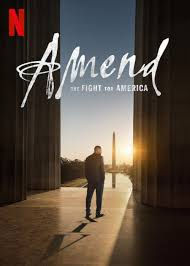
Amend: The Fight for America (2021)
Directors: Kenny Leon and Reinaldo Marcus Green The series examines the legacy of the 14th Amendment from its ratification following the Civil War through present-day struggles for equality. Each episode focuses on a different theme and marginalized group's fight for rights under this constitutional amendment. Using a unique theatrical approach, celebrated actors including Mahershala Ali, Sterling K. Brown, Samuel L. Jackson, Diane Lane, Pedro Pascal, Laverne Cox, and Courtney B. Vance perform dramatic readings from historical documents, speeches, letters, and diaries of key figures in American civil rights history.
.jpeg)
Breaking Boundaries (2021)
Director: Jonathan Clay The documentary follows Professor Johan Rockström's scientific journey and groundbreaking research identifying nine critical planetary boundaries that define a "safe operating space" for humanity. These boundaries include climate change, biodiversity loss, land-system change, freshwater use, biogeochemical flows (nitrogen and phosphorus), ocean acidification, atmospheric aerosol loading, stratospheric ozone depletion, and novel entities (chemical pollution). The film reveals that humanity has already crossed several of these boundaries, pushing Earth into dangerous territory.
Decolonizing Wealth: Indigenous Wisdom to Heal Divides and Restore Balance
Author: Edgar Villanueva is a Native American (Lumbee tribe) social justice philanthropist and activist who has worked in foundations and nonprofits for over two decades. He's been named one of the "Top 50 Most Influential Minorities in Philanthropy" and uses his insider perspective to challenge the sector. Synopsis: A Native American working in philanthropy exposes how the nonprofit industrial complex perpetuates colonizer dynamics and offers a radical reimagining of how wealth should flow. Villanueva argues that money itself isn't the problem - it's how we think about it, hoard it, and distribute it. He provides seven steps to "decolonize" wealth and transform philanthropy from a tool of control into a medicine for healing communities. This book directly speaks to the work LRDG does in redesigning philanthropic practices rooted in equity.
Emergent Strategy: Shaping Change, Changing Worlds
Author: adrienne maree brown is a Black feminist writer, social justice facilitator, and pleasure activist based in Detroit. She's the co-editor of Octavia's Brood: Science Fiction Stories from Social Justice Movements and has been organizing for over 20 years in movements for racial, economic, and environmental justice. Synopsis: Drawing from biomimicry and science fiction, brown offers a transformative approach to social justice work that emphasizes small-scale, iterative change over grand revolutionary gestures. She presents principles like "small is good, small is all," "change is constant," and "there is always enough time for the right work." This book is essential for anyone doing organizational transformation work, offering practical wisdom on how movements grow, adapt, and sustain themselves. It's about working with change rather than against it.
The Purpose of Power: How We Come Together When We Fall Apart
Author: Alicia Garza is a Black organizer, writer, and freedom dreamer who co-created the Black Lives Matter Global Network. She's been organizing for racial justice, gender equity, and workers' rights for over two decades and is the Principal of the Black Futures Lab and Black to the Future Action Fund. Synopsis: The co-creator of Black Lives Matter reflects on what it takes to build powerful, sustainable movements for social change. Garza examines the difference between protest and organizing, the importance of political education, and how to build coalitions across difference. She offers hard-won lessons about leadership, community accountability, and the long-term work of transformation. This is a blueprint for anyone committed to justice-aligned leadership and movement building.
My Grandmother's Hands: Racialized Trauma and the Pathway to Mending Our Hearts and Bodies
Author: Resmaa Menakem is a Black licensed clinical social worker, trauma specialist, and sought-after trainer who has worked with survivors of trauma for over three decades. He specializes in the effects of trauma on the body and communities, and works with organizations, communities, and individuals to address racialized trauma. Synopsis: A therapist explores how racial trauma lives in our bodies and gets passed down through generations. Menakem argues that we can't think our way out of racism - we must address the trauma held in our nervous systems. He offers body-centered practices for Black, white, and police communities to begin healing racialized trauma. This book is crucial for understanding why equity work must address both systemic change AND personal/collective healing.
So You Want to Talk About Race
Author: Ijeoma Oluo is a Black and Japanese American writer, speaker, and Internet Yeller from Seattle. She's the author of multiple books on race and justice, and her work focuses on the intersections of race, gender, and social justice in America. She's been named one of the most influential people in Seattle and The Root's 100 Most Influential African Americans. Synopsis: A straightforward, accessible guide to discussing race in America. Oluo tackles difficult questions like "What is intersectionality?" "Why can't I say the N-word?" "What is cultural appropriation?" and "How do I talk to my children about race?" She provides practical frameworks for having honest conversations about privilege, oppression, and systemic racism. This book is perfect for organizations beginning their equity journey and needing clear language to navigate these essential conversations.
Events
Stay connected with highlights and takeaways from events in our ecosystem. We'll share key insights, standout moments, and useful resources from workshops, talks, and gatherings so you can stay informed, deepen learning, and bring what matters back to your work.
Plymouth Housing's Juneteenth Celebration
Ruby served as the keynote speaker for Plymouth Housing's Juneteenth Celebration, held at Hildebrand Hall, Plymouth Church, in Seattle. Speaking to staff and residents, she delivered a message marked by candor, wisdom, and authenticity, challenging attendees to continue the work of advancing racial justice while honoring the history and legacy the day represents. Her warmth and enduring spirit left a lasting impression, moving the audience and inspiring renewed commitment to equity and community. In recognition of her impact, Plymouth Housing's Vice President of Culture & Impact personally praised Ruby as "a treasure in our community," underscoring the depth of connection she fostered through her storytelling.
.jpeg)

Black Excellence Brunch
We were proud to support Dr. Kemi Doll at the Black Excellence Brunch in Las Vegas, where she delivered a powerful message on womb healing and the collective strength of Black women. Dr. Doll challenged the room to move beyond endurance and toward advocacy — a message that deeply aligns with our commitment to equitable health and community empowerment. Her words resonated deeply with attendees, sparking meaningful conversations about the standards Black women deserve in their healthcare journeys. It was an honor to be part of a space where these vital conversations are taking center stage, and we look forward to continuing to support voices and events that drive real, lasting change.
.png)
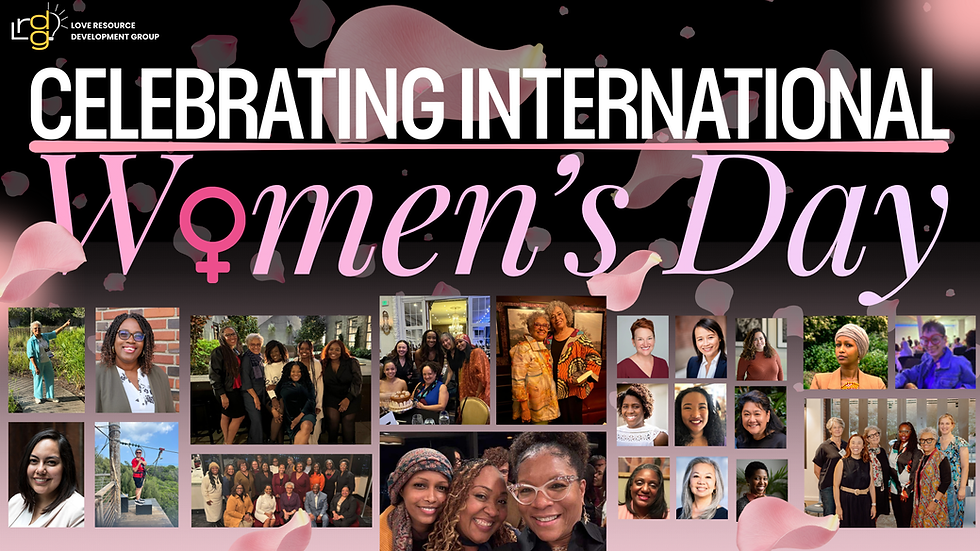
International Women's Day
This March, we're excited to celebrate International Women's Day by highlighting the remarkable contributions of women throughout history and in our own community. This year's celebration will feature a special podcast episode with our very own Ruby, who will explore the theme of women's empowerment, share stories of resilience and achievement, and discuss the ongoing challenges women face in the pursuit of equality. Join us as we honor the trailblazers who came before us, celebrate the women leading today, and reflect on how each of us can contribute to a future where gender equity is not just an aspiration but a reality. Tune in to hear Ruby's inspiring conversation and be part of this important dialogue.
Dinner with Distinction
Dinner With Distinction was an intimate gathering held high above the city in the iconic Columbia Tower—an evening curated by Ruby Love, Dr. Angela Griffin, and joined by distinguished speakers Dr. Gwynth Johnson and Dr. Robert Jennings.
This special event brought together a powerful community of women-of-color leaders, founders, and business owners, creating a space for connection, celebration, and shared truth. Guests engaged in meaningful dialogue about equity, legacy, leadership, and the future of community-centered success.
.jpeg)